The city
Bellini's Catania: five places to see
Five places in Catania tied to Bellini: his birthplace museum, his tomb, his monument, the opera house that bears his name and the concert church.
Reserve seats for the concert ↗Five places, one composer
Catania keeps Bellini close. Within the old centre you can see where he was born, where he lies, where he is honoured in stone, where his operas are staged and where his music is played in a Baroque church. None needs a long trip, and together they turn a concert evening into a fuller day. Opening arrangements change, so check on the day before you go, and treat the order below as a suggestion. Most of the stops are free to see from outside, and every one sits within the old centre.
The Museo Belliniano
The museum is in the Palazzo Gravina-Cruyllas on Piazza San Francesco d'Assisi, the building where Bellini was born in November 1801. The birthplace was declared a national monument in 1923 and the museum was inaugurated in 1930. The visit follows his life and career, and one room holds many of his handwritten manuscripts. Downstairs, the exhibition also takes in a collection of pianos, posters from Bellini celebrations and a large library.
The cathedral and the tomb
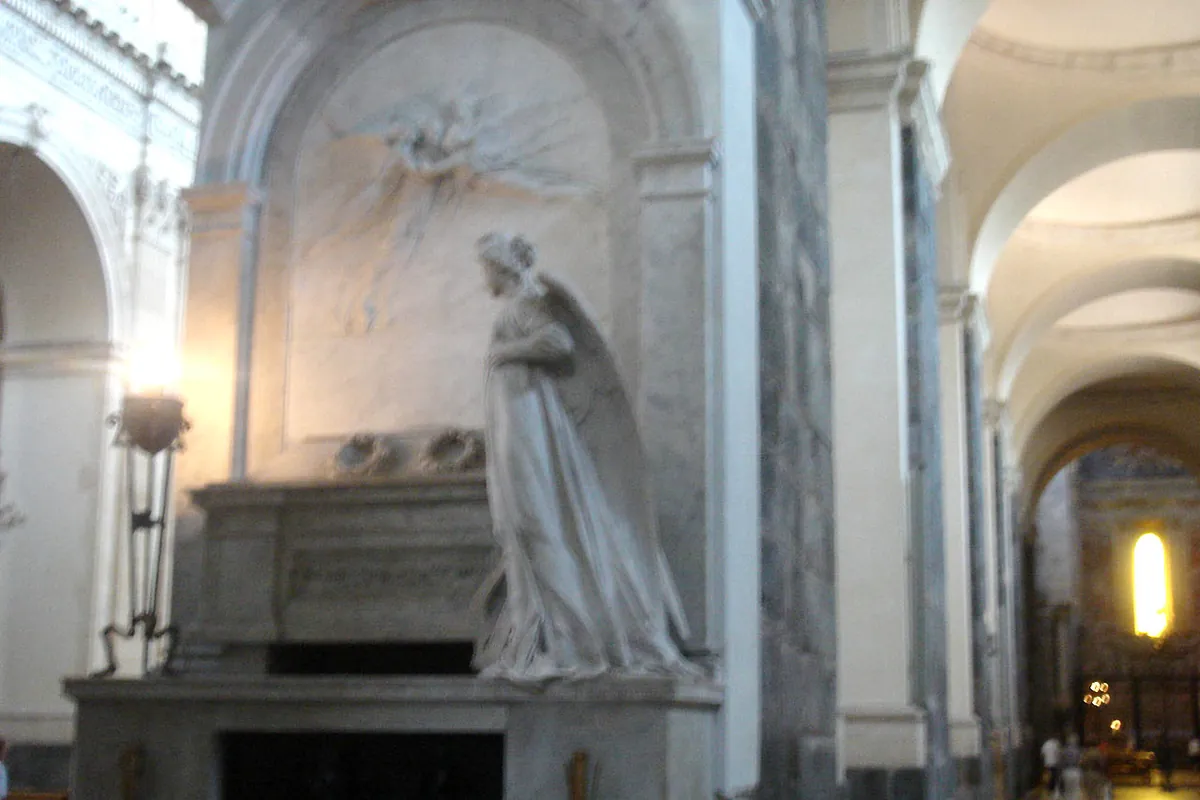
Catania Cathedral, dedicated to Saint Agatha, holds Bellini's tomb. He was first buried in Paris, and his remains were moved to the cathedral in 1876. The Badia di Sant'Agata, where the concert takes place, stands next to the cathedral, so the tomb is the obvious visit before or after the music. The cathedral is also an active church, so keep your voice low.
The monument in Piazza Stesicoro
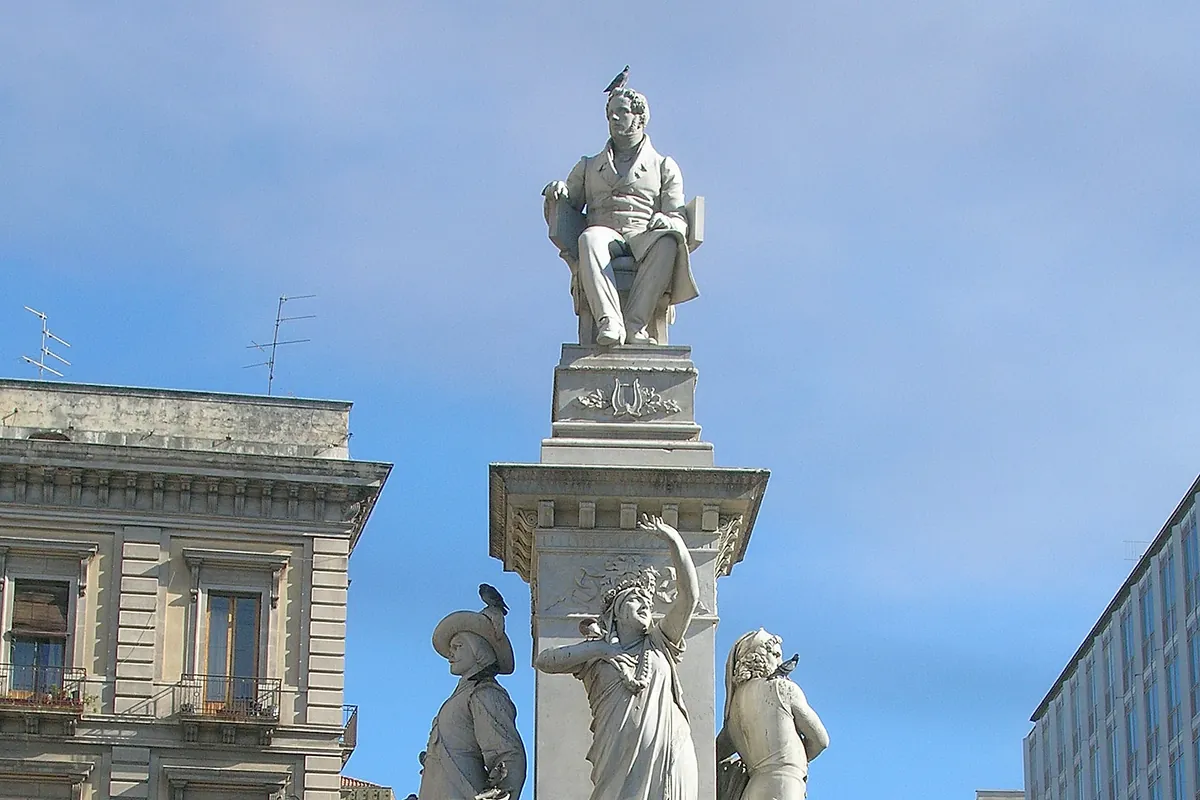
A monument to Bellini stands in Piazza Stesicoro, in the centre of the city, with the composer seated high on a plinth and statues around its base. It is a short stop and a good place for a photograph. It shows how the city remembers him: not in a museum case but in the open, among the shops and traffic of an ordinary working square.
The Teatro Massimo Bellini
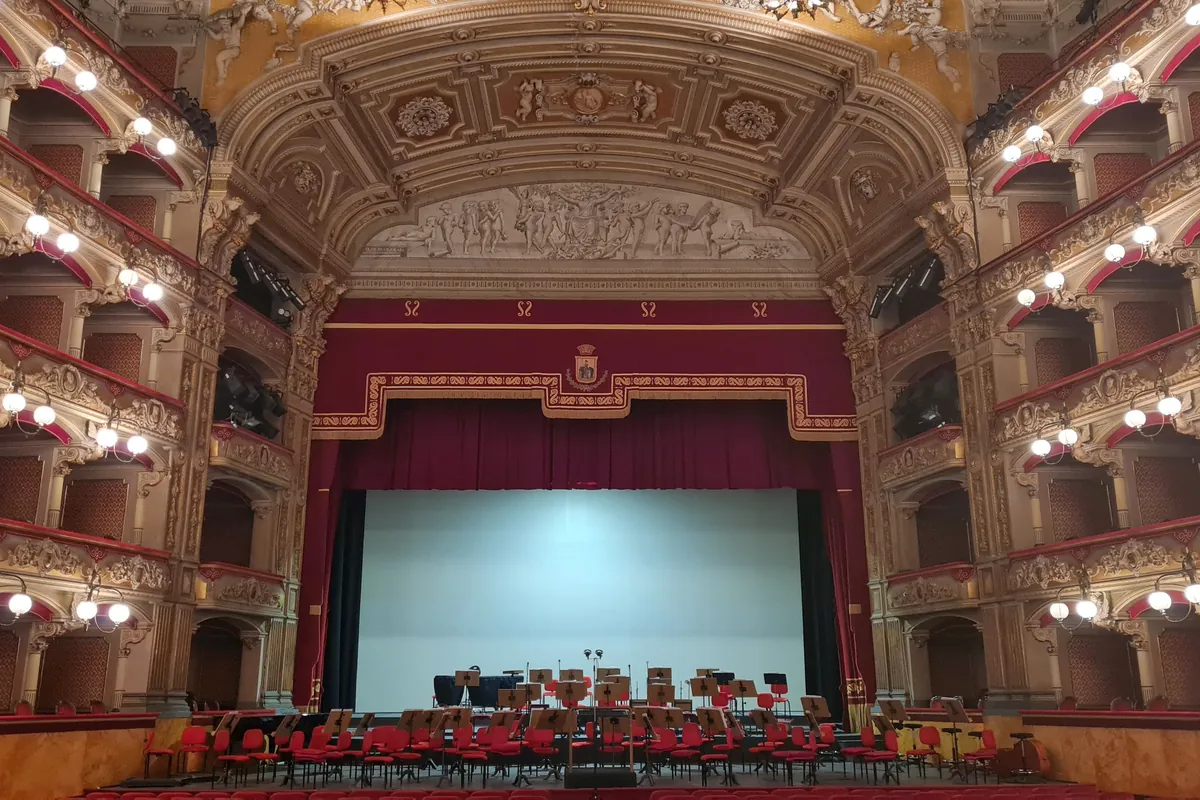
Catania's opera house opened on 31 May 1890, with a performance of Norma, on Piazza Vincenzo Bellini. Its auditorium has four tiers of boxes and a painted ceiling by Ernesto Bellandi showing scenes from four of Bellini's best-known operas. In 1951 Maria Callas sang Norma here for the 150th anniversary of his birth. Productions and tours have their own dates and ticket arrangements, so treat a visit as a separate plan from the concert.
The road to the opera house
The theatre took almost two hundred years to realise after the 1693 earthquake. A foundation stone was laid in 1812, but money ran short, and a smaller provisional municipal theatre opened in 1822 instead. In 1870 the architect Carlo Sada was appointed to look for a site, and the city eventually committed to a single-purpose opera house on the original ground. Construction then took seven years, which is why the opening in 1890 came so long after the first plans.
The Badia di Sant'Agata
The church that hosts the concert was designed by Giovanni Battista Vaccarini and rebuilt after the 1693 earthquake. Its octagonal dome has a walkway and terraces that have been open to visitors since 2015. The concert is the best reason to go inside, because the church is a good listening room, and it is the one place on this list where you hear Bellini rather than read about him.
Putting them in order
On a day with a concert in the evening, start with the museum while it is open, then walk to Piazza Stesicoro and on to Piazza del Duomo. Visit the cathedral and the tomb, then take dinner early enough to reach the church for the start time shown on your confirmation. Keep the opera house for a trip with a production date that suits you, and leave room in the day for simply sitting in the square. If you only have an hour, choose the cathedral, since it holds the tomb and sits beside the concert church.
Sources